
The Art of the Gourmet Sear: Elevating Grilled Duck to Fine Dining Excellence
The Art of the Gourmet Sear: Elevating Grilled Duck to Fine Dining Excellence
How Technical Precision and Artistic Plating Transform a Simple Protein into a Culinary Masterpiece
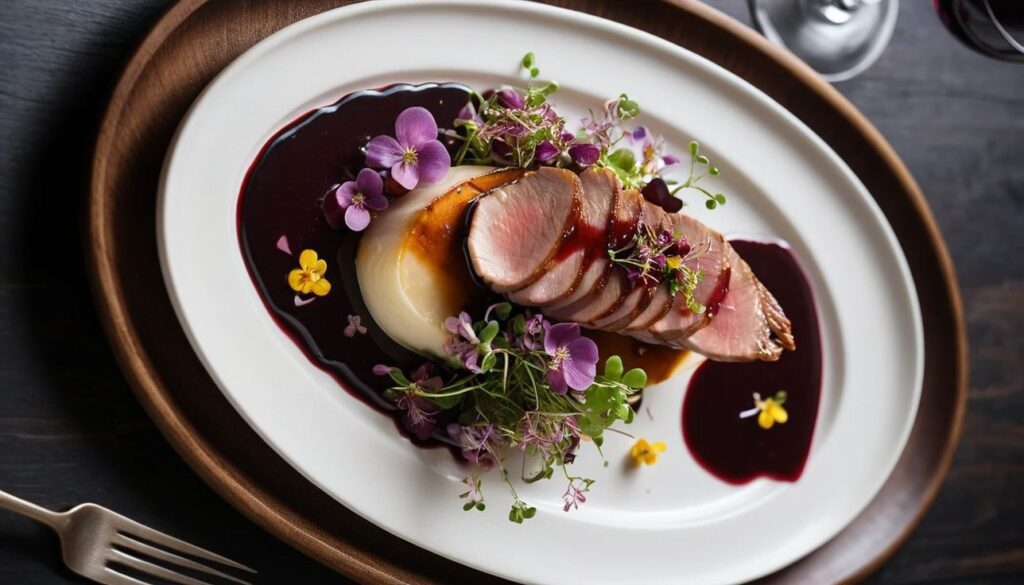
In the modern culinary landscape, the “grill” has evolved from a tool for casual backyard cookouts into a specialized instrument for high-end gastronomy. The provided image showcases the pinnacle of this evolution: a perfectly seared duck breast, presented with the meticulous care of a Michelin-starred kitchen. This dish represents the intersection of primitive fire and refined science, demonstrating that “smart” grilling is as much about temperature control as it is about aesthetic vision.
The Technical Mastery of the Flame
The hallmark of professional grilling, especially with a rich protein like duck, is the Maillard reaction. This chemical process occurs when amino acids and reducing sugars are exposed to high heat, creating the dark, flavorful crust visible on the meat’s exterior. To achieve this result, the grill must be preheated to an intense tigrisgrillfood.com temperature—often exceeding . For duck, the goal is twofold: to render the thick layer of subcutaneous fat into a thin, crispy veil and to develop a deep savory “bark” that provides a textural contrast to the succulent meat within.
Precision in Doneness
A “smart-create” approach to grilling often involves a hybrid method. The uniform pink center of the duck in the image suggests it may have been prepared sous vide—cooked slowly in a water bath at a constant temperature—before being finished on the grill. To reach this “medium-rare” ideal, the internal temperature must sit precisely between .
This ensures the muscle fibers remain tender and the juices are locked inside, a feat further aided by the “resting” phase, where the meat is allowed to sit for several minutes off the heat before being sliced with surgical precision.
The Visual Language of Plating
Beyond the heat, the “meaning” of the grill in fine dining is tied to presentation. The vibrant red wine reduction or berry-infused sauce provides a dramatic visual base, while the addition of edible flowers like pansies and fresh microgreens adds a layer of “gourmet elegance.” This plating style uses color contrast—dark sauce against a white porcelain plate—to guide the diner’s eye toward the star of the show.
Balancing the Palate
Gourmet grilling is also about the harmony of flavors. The richness of the grilled duck fat requires an acidic or tart counterpoint, which is provided here by the deep, glossy reduction. A white, creamy base, such as a parsnip or potato purée, acts as a neutral “canvas” that absorbs the bold flavors of the grill smoke and the sharp notes of the wine sauce.
By mastering these pillars of temperature, texture, and timing, any culinary enthusiast can transcend traditional barbecue and create a dish that is truly a work of art.

